Friday, October 11, 2013

Today in History: Inconsistency

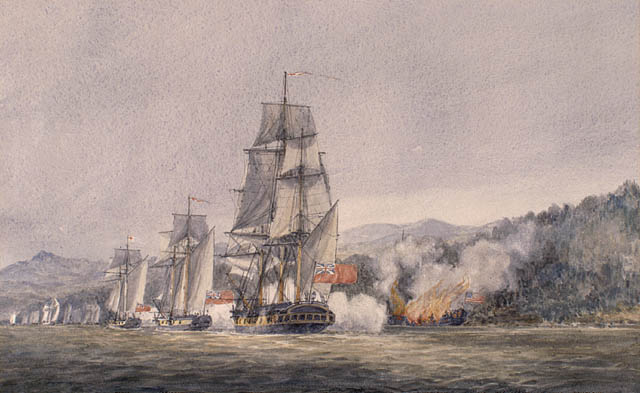
The formation of ships in the Battle of
Valcour are depicted in the painting
My Today in History posts have been on and off in a month, inconsistency after inconsistency, even after promising to write consistent post. I truly believe this will be my last time promising that for at long time, as I start to manage my time more wisely and begin to focus blogging as more than just posting random facts of history, but also more opinionated post like my travels and thoughts on general news. Today was an interesting day to get my blog together, because it has so many events in the 20th century.

A map representing routes and general
locations of fleets in Valcour
Hold your horses! Though there was many interesting events in the 1900s, I want to pull back to the American Revolution. Today in 1776 marks what many historians may argue as the first naval battle in the American Revolution, the Battle of Valcour Island. This battle was also noted to be one of the first United States Navy battles, however resulting in large disaster in accordance to the troops sent out. Brigadier General Benedict Arnold lead a relatively small fleet of 15 ships with 500 sailors against a strong 25-ship-697-sailor-lead Sir Guy Carleton. After the Continental Army's retreat to Fort Ticonderoga and Fort Crown Point in June that same year, the British greatly increased their military force. Superior navally, the British were prepared. On this day in 1776, Arnold manipulated the British to work to a position to boost the Americans from winning. As the battle commenced, many American ships were lost, totaling 11 by the end of the day. Eighty Confederates were killed or wounded while 120 were captured as a result. Though still a lost in Arnold's part, he then commanded West Point. However, his command of West Point four years later resulted in his infamous bribery scandal labeling his name "Benedict Arnold" as a synonym of "traitor.

A big transition to the 20th century begins in World War I. October 11th, 1915 marks the date that Bulgaria announces its entry into the First World War. In a way, Bulgaria was a "swing country," being pursued by both sides of the war. Bulgaria's participation in World War I ended nearly three years after it joined on September 29, 1918, losing over 90,000 soldiers.
A Japanese warship was destroyed
as a result of the Battle of Cape Esperance

World War II no doubt laid an important scar in world history. This day in 1942 marks the beginning of  the two day Battle of Cape Esperance. It was a naval war, this one taken place on Guadalcanal Island in the Pacific, that resulted in an American victory over Japan. Cape Esperance allowed the U.S. naval forces to further analyze Japan's naval fighting skills, leading to an eventual Japanese evacuation of Guadalcanal by the end of 1942.

I've noticed that I have not talked too intensively on the Vietnam War in my posts, except the occasional fact. Today marks the day that Viet Minh formally takes control of North Vietnam in 1954. This did not mark the beginning of the war, as that occurred a year later in 1955. Viet Minh was the Vietnam Doc Lap Dong Minh, or a Vietnamese Independence League to separate itself from French colonial rule that played an important factor during the war.
The astronauts of Apollo 7.
Pictured left to right:
Eisele, Schirra, Cunningham

In astronomical news, Apollo 7 launched on October 11, 1968 into space on a mission to orbit the earth. Orbiting for 11 days, the crew of Walter Schirra Jr., Donn Eisele and Walter Cunningham transmitted the first live television broadcast from orbit on this mission.

Interestingly, October 11, 1975 was a double event day. The first was the marriage of Hilary Rodham and Bill Clinton in Little Rock, Arkansas. Meeting at Yale while studying law in 1972, the two met and married on this day in 1975. Clinton later became president from 1991 to 2000, however was generally overshadowed by his famous affair scandal and became the second president to be impeached, though he was not removed from office. Both Bill and Hilary pose a strong political significance, as Hilary also rand for president in 2008, but was appointed secretary of state by Barack Obama in 2009.
A skit in the 1975 season of SNL

The second event of the same day, October 11, 1975, was the debut of Saturday Night Live. The comedy sketch feautred Chevy Chase, John Belushi, Gilda Radner, Laraine Newman, and an even bigger cast. Beginning each episode with an opening sketch resulting in one actor saying, "Live from New York, it's Saturday Night!" Still on air today and on its 39th season, SNL is known for its mocking parodies and impersonations along with acting and performances from musical icons, famed actors, and politicians. SNL is currently the longest running and highest rating show on late night television.

Saturday, October 5, 2013

Today in History: Revisited!

It's been a wild year, beginning another year of high school. Though "Today in History" has been lacking for the past month, it will be posted more consistently because I slowly learn better ways to manage my time. Without further ado, I present: October 5th Today in History!

Firstly, I have to give a shout out to my friend Clara! It's her 15TH BIRTHDAY! Happy Birthday Clara! In six months you can get your permit! :) Hope your birthday is CRAZY, but not as crazy as what happened today in history!

The destruction left on the battlefield
in Allatoona in 1864
Now today was truly an eventful day in history, especially for the city of Cupertino, but the action begins with a Union win at the Battle of Allatoona in the American Civil War. Allatoona was a relatively small battle, though it produced a high percentage of casualties (approx. 35% for the Union, 27% for the Confederacy). Confederate General John Bell Hood attacks Union General William T. Sherman, after losing the city of Atlanta, on this day on October 5th, 1864. Hood had planed to draw Sherman back to northward in September 1864, but did not have enough troops to move Sherman. This battle, where divisions of the Confederacy and Union clashed near Bartow County, Georgia, only lasted a day, though forced General Hood to retreat his army back west into Alabama.

A 1947 Ferrari 125 S
When thinking of luxurious sport cars, the Ferrari S.p.A must come to mind. On this day in 1919, ten years before the founding of the Ferrari car company, founder Enzo Ferrari makes his racing debut, finishing in fourth place. Enzo was an Italian car mechanic and engineer who passionately made cars, but was not truly a magnificent race car driver. Winning only 13 of 47 races, many speculated that Ferrari retired as he was a passive driver, afraid of ruining the engine to win a race. Ferrari retired after a short racing career in the mid 1920s, eventually designing the Ferrari 125 S that debuted in 1947, creating one of the world's greatest luxury car companies.

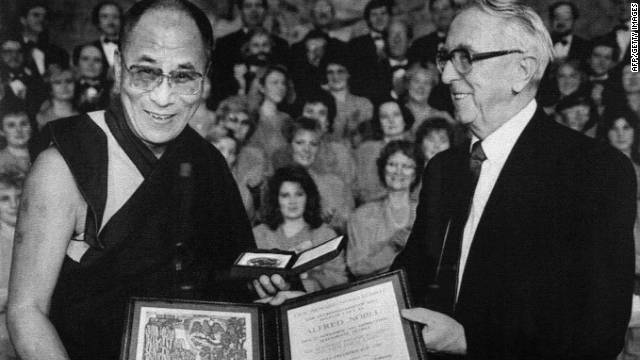
Today in history was a peaceful and nobel day, when referring to the Nobel Prize and the Nobel Peace Prize. Isaac Bashevis Singer, author of The Family Moskat, The Manor, and The Estate, Singer won the Nobel Prize in literature, gaining popularity with the Jewish, Polish, and Americans. His stories, written in Yiddish and translated into many other languages, wrote many of his pieces about life in Poland and the United States as a Jew. The Dalai Lama is an important religious leader for those in Tibet. The current Dalai Lama, the 14th Dalai Lama, won the Nobel Peace Prize on this day in 1989 for nonviolently campaigning against Chinese domination of Tibet. The 14th Dalai Lama, religiously known as Tenzin Gyatso, has reign since November 17th, 1950 at age 15, currently serving as the longest Dalai Lama.
The 14th Dalai Lama receiving the
Nobel Peace Price in 1989 

For those living in Cupertino or adjacent areas, the day of October 5th, 2011 was a wild and crazy day. From the early morning in the Permanente Quarry in the west mountains of Cupertino, Shareff Allman, a worker at the quarry, shoots and kills 3 of his coworkers while injuring 6 others in a fit of anger. Running to the parking lot of a Hewlett Packard campus 2 miles away, Allman attempts to carjack a 60-year-old women then shoots her in the leg. Schools in the Cupertino Union School District and Fremont Union High School District were placed on Code Blue, as message to parents about the status of regular school activities were not throughly transferred to everyone until after many students were dropped off. The shooter, Allman, was caught the next morning in a Sunnyvale home adjacent to the site of the Hewlett Packard carjacking.
Steve Jobs demonstrates the iPhone in a lecture

However, the anticipations ran high on that day, as the arbitrary shootings in Cupertino coincided with the death of Apple co-founder, Steve Jobs. What does the death of Steve Jobs have to do with Cupertino? Well, Apple's headquarters is based in Cupertino, where flocks of people flooded after hearing the death of "a visionary and creative genius" (Apple's corporate website). Sitting in my math class on October 19th that same year, I remember hearing the beautiful sounds of Coldplay from Apple HQ playing at the memorial of Steve Jobs. Today in history is truly one that I personally, cannot forget.

Sunday, September 1, 2013

Today in History: So Much to Do!

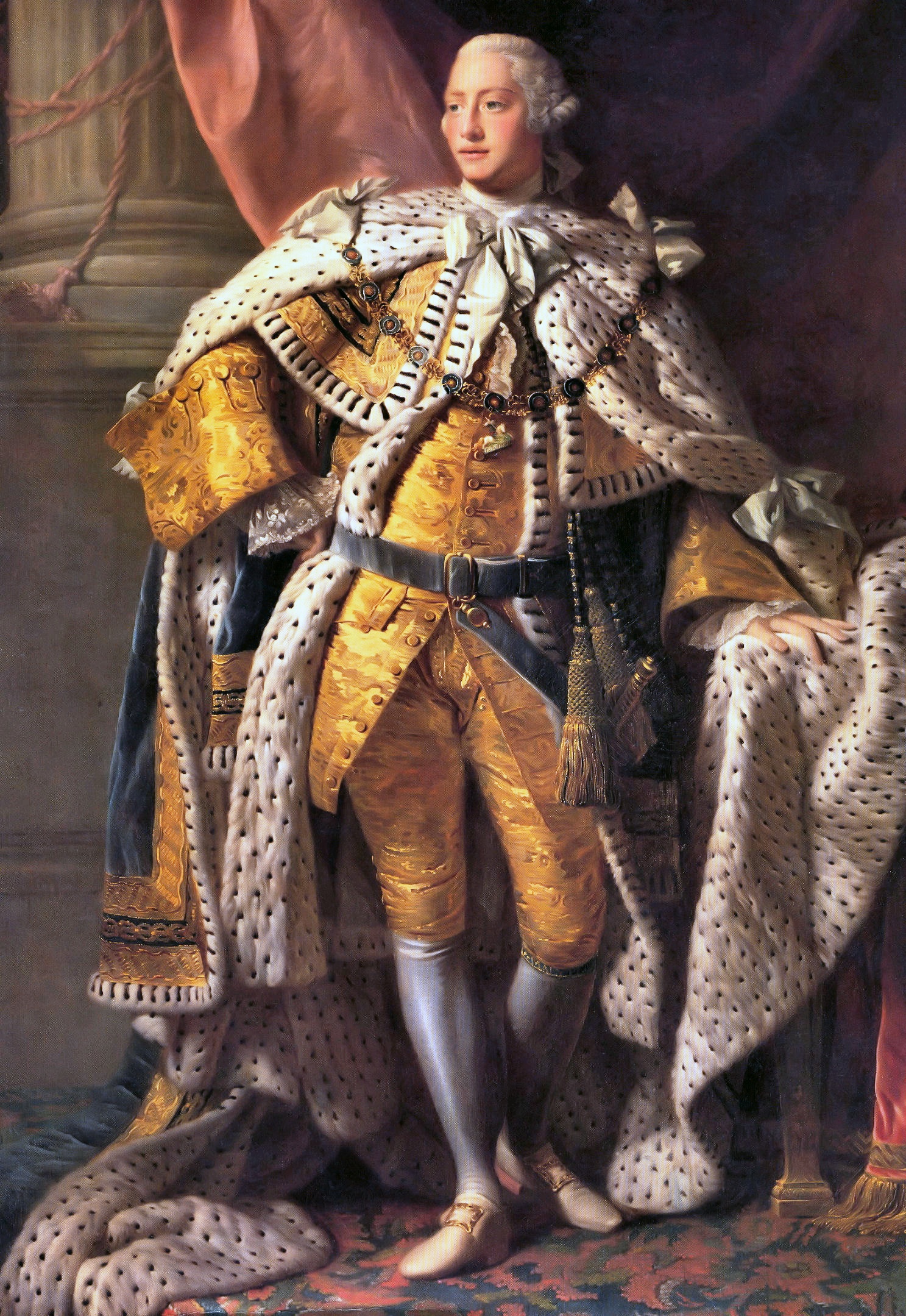
A portrait of King George III
Today in history was really a historic one, starting with a rejection by King George of Great Britain. On July 5th, 1775, the Olive Branch Petition was created by the Continental Congress of the United States, which was sent to England three days later on July 8th. On this day in 1775, the petition had finally reached its recipient, King George. King George quickly rejected this petition that longed for compromise between the colonies and Great Britain. After the news of its rejection, the colonies quickly began to form the Declaration of Independence to formally declare its independence from King George and Great Britain.

Yesterday in History, I noted the start of the Battle of Jonesboro in the American Civil War. On this day in 1864, the battle continued to rage on, but with the important capture of Atlanta, George by the Union forces, the Union had won this two-day battle. This win for General William T. Sherman virtually secures Abraham Lincoln's reelection later that fall.

Hitler commands his army to
attack Poland, initiaing WW2
Imagine yourself in late 1930s Poland, where life is simple, no technology, but living in a small cottage with not only your immediate family, but also your aunts, uncles, and cousins. Now imagine just sleeping in a hard mat that was your bed, when suddenly in the early morning of September 1st, 1939, over 1.5 million German soldiers invade your homeland. This was true for Polish residents living by the nearby bordered Germany. With Germany's invasion of Poland, World War II had began in the still morning of 4:45am on this day in 1939. Not only invading the borders of Poland, Germany also simultaneously bombed Polish airfields, attacked Polish navel forces in the Baltic Sea, and reeked havoc throughout Poland. Not convinced by German leader Adolf Hitler's excuse of claiming this invasion was a "defensive action," both Britain and France declared war on Germany two days later, adding oil to the fire of World War II.

A modern image of the wreck
of the RSS Titanic
If you are a consistent reader of my Today in History post, you know that I am a huge baseball fan. Baseball is not only America's national pastime, but also one of Japan's most popular sports. On this day in 1964, the first Japanese baseball player makes his Major League Baseball debut. Pitcher Masanori Murakami of the San Francisco Giants tosses one scoreless inning in a 1-4 Giants loss versus the New York Mets. Murakami was the only Japanese player to play in the majors even 30 years after his debut until pitcher Hideo Nomo made his debut in 1995. Great Japanese imports to play in the majors include Ichiro Suzuki, Hideki Matsui, and the recent Yu Darvish.

The Titanic, a 1997 directed by James Cameron is one of the highest grossing movies of all time, but the story of the real RSS Titanic is truly astonishing. Today in history was an advancement in the Titanic story, as the wreck of the "unsinkable" vessel was found in 1985. A U.S.-French joint expedition locates the sunken ship 400 miles off the shore of Newfoundland. I have more information about the Titanic in one of my first Today in History post here.

Saturday, August 31, 2013

Today in History: Striking Out, Yet Making History

General William
T. Sherman helped
the Union capture Atlanta
I had a dream, that I would eventually be back to blogging my Today in History post. That dream began today! Starting school was very busy for me, but it will not stop be from writing my post! I can't believe I missed out writing about the 50th anniversary of Martin Luther King Jr.'s
I Have A Dream" post on August 28! However, time has moved on and that was all history, so I digress and will explain the events on this day, August 31st, in history!

Georgia was an important state in the American Civil War. It was a large slave state, but also where General Sherman's March to the Sea, a large advancement for the Union in the war's final months, took place. We can back up a few months before Sherman's March to this day in 1864, where the decisive Battle of Jonesboro begins. Union General William T. Sherman launches this attack that would eventually lead to the capture of Atlanta, Georgia for the Union, forcing Confederate soldiers to flee the area. It did not only influence the battles of the south, but also secured Abraham Lincoln's reelection in the fall of 1864.

Charles Kayser of
the Edison lab pictured
with a Kinetograph
If I asked you what a Kinetograph (or a Kinetoscope) is at the top of your head, what would you say? I honestly did not know what it was honestly, but after researching a little bit, I found out it was a type of movie camera patent by Thomas Edison on this day in 1897. With still-photography principles surfacing society in the late 1890s, Edison used these concepts to create a movie recording device. His new device used celluloid film, a new concept in the camera industry. By 1909, Edison had left the film industry, though the kinetograph had already been another invention in his impressive resume.

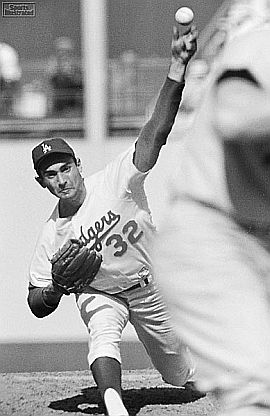
Sandy Koufaxin his
historic 18-strikeout
performance
Avoiding any war for the United States, President Franklin D. Roosevelt signed the Neutrality Act on this day in 1935. This was the first of a series of Neutrality Acts, as this act of 1935 was set to expire 6 months after its ratification. Eventually by March of 1941, the end of the neutrality came when the Lend-Lease Act was passed to increase America's military export to Britain, which helped the English when Adolf Hitler's German forces advanced toward England.

To the end the day off with some classical, historical baseball, we must draw our attention to Sandy Koufax's dominating performance against the San Francisco Giants on this day in 1959. With his dominating performance, Koufax lead the Brooklyn Dodgers in a 5-2 win over the San Francisco Giants at Los Angeles Memorial Coliseum. With 60,194 in attendance, Koufax allowed 2 earned runs on 7 hits in 9 innings while striking out 18, setting the National League record at that time for must strikeouts in a game. Among the 18 strikeouts, the Giants 3-4-5 hitters Willie McCovey, Willie Mays, and Orlando Cepeda, all future Hall of Famers, struck out 6 times. Koufax himself also struck out 2 times in his 3 at bats of the day.

Tuesday, August 20, 2013

Sincere Apoligies!

Hello readers! I sincerely apologize for the  missing Today in History posts. I have started school this week and have been very busy. This week will have limited posts because of my busy week, but I am definitely continuing the series! Starting next week, the Today in History posts will be back to a regular schedule. 

Sunday, August 18, 2013

Today in History: There's A Start and An Ending

A 14th-century depiction of
Mongol leader Genghis Kahn
A reported noted that 1 in 200 of the world population are possibly related to Genghis Khan. If the report were truly accurate, that would mean that at least 1 in 200 people in this world lost at least one descendent today in 1227.  August 18th, 1227 marks the death of Mongol leader Genghis Khan, who died in a camp while campaigning against the Xi Xia kingdom in China during the Song Dynasty. Unknown of true age, historians have estimated at the time of his death, the senile Khan was over 60 and suffered from multiple injuries like falling off a horse a year before. Khan ordered the kingdom of Xi Xia to be completely destroyed on his deathbed. Following Khan's orders, the kingdoms were demolished by the Mongols. The Mongols killed anyone who laid an eye on the funeral possessions of Khan, which were making its way back to the capitol of the Mongol empire, Karakorum. Khan's resting place is currently still a mystery.

The first page of
the Jay Treaty
The Jay Treaty was a treaty proposed mainly by Alexander Hamilton, John Jay, and George Washington, was signed by Washington on this day in 1795. This treaty, also known as the Treaty of London of 1794, was to sooth post war tensions between the newly-formed United States of America and Great Britain. British King George III had signed this treaty nearly a year before on November 19, 1794. After much opposition to the treaty in the United States, it had been finally been approved by Congress days before on August 14th, only awaiting president approval. 

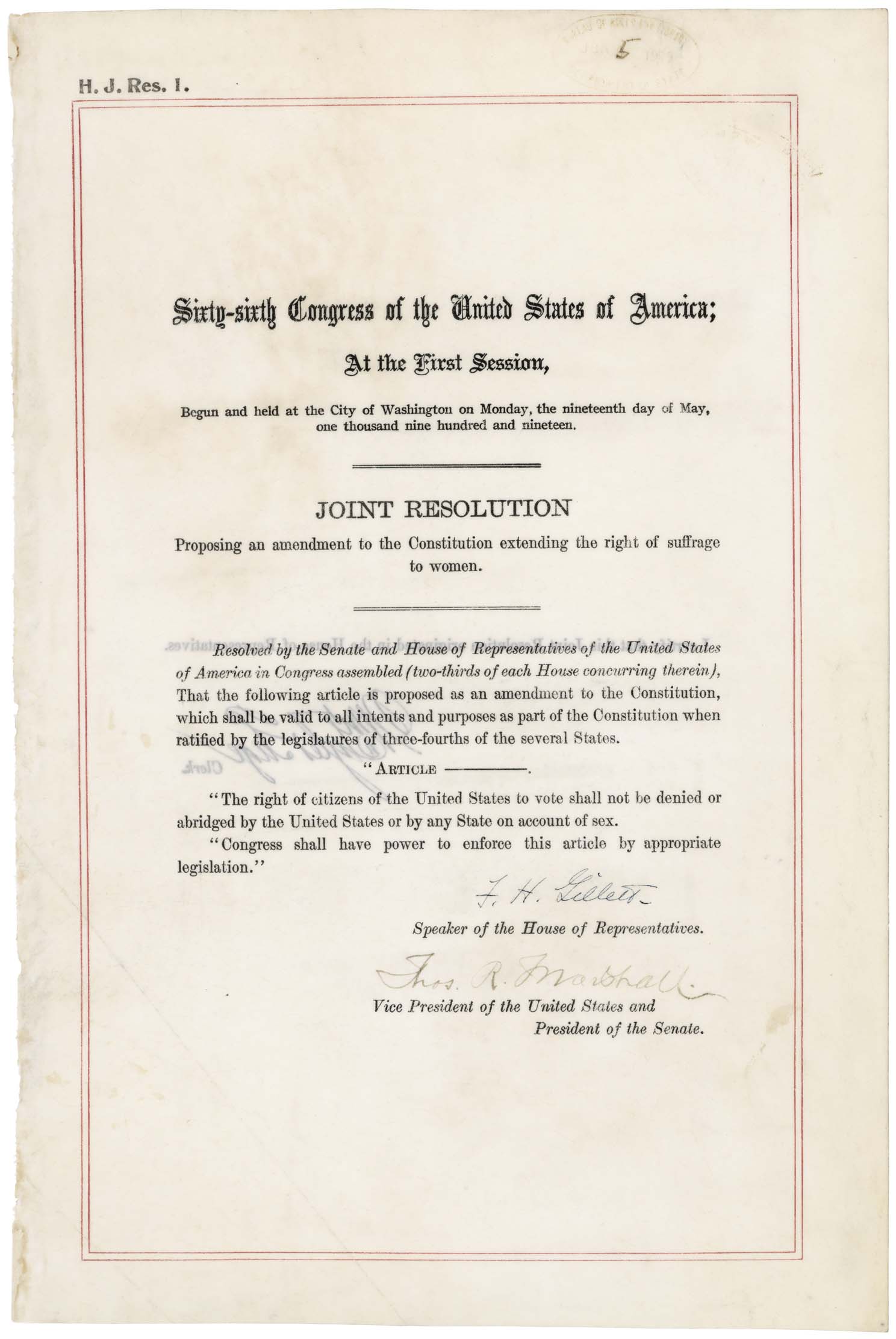
The 19th Amendment document
can be found in the US
Government archives
Women's rights have always been a problem in the world. On this day in 1920, women's rights in the United States makes a big milestone with the ratification of the 19th Amendment, guaranteeing women the right to vote. With Tennessee ratifying the amendment, allowing the two-thirds of state majority vote on the amendment, the simple two sections described that the "right of citizens of the United States to vote shall not be denied or abridged by the United States or by any State on the account of sex." 

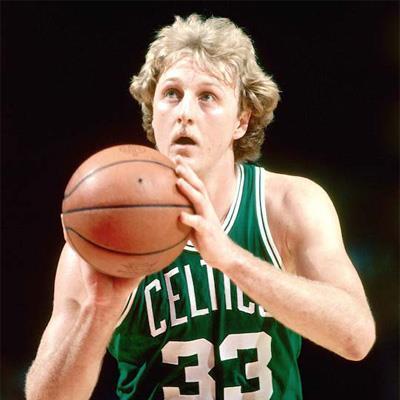
An image of Bird
playing on the
Boston Celtics
Today in history marks the 21st anniversary of basketball legend, Larry Bird. On August 18th, 1992, Bird announced his retirement as a player in the NBA. Bird's jersey number 33 was retired by the Boston Celtics shortly after. Retiring from the NBA as a player did not stop him from totally disappearing from the NBA. He worked as the Celtics' front office special assistant for five years until he was hired as the Indiana Pacers head coach. In 1998, Bird continued his legacy with an induction into the Basketball Hall of Fame. Bird also was named NBA Coach of the Year that year after leading the Pacers to a franchise record 58-24 season. Currently, Bird is the Pacers' president of basketball operations. 

Saturday, August 17, 2013

Today in History: Going the Distance

Gehrig along with other Yankees legend, Babe Ruth
For any fan of baseball, Lou Gehrig was no doubt an amazing player. Today in 1933 was the day that Henry Louis Gehrig of the New York Yankees, breaks former Yankee Everett Scott's record for consecutive games played. Scott had played 1,307 consecutive games until Gehrig played in 1,308th on August 17th, 1933 versus the St. Louis Browns. Gehrig went 2-5 with an RBI. The Yankees lost 6-7 to the Browns, but Gehrig would go on to play in 2,230 consecutive games, a Major League record for over half a century until Cal Ripken Jr. surpassed him on September 6th, 1995.

Nearly a year after starting construction on August 13th, 1961, a man tries to cross the Berlin Wall, though is killed on this day in 1962. Before this man's death, he attempted to escape with another friend from East Germany to West Germany for freedom. His friend climbed over the barbed wired fence and managed a few cuts, but escaped safely to West Berlin. The man killed on this day attempted to escape, but was shot by machine guns controlled by East German soldiers. Even after being shot, the man stood up and attempted climbed across the wall, only to be shot once again. The man falls from the wall on the East German side, slowly bleeding into a painful death. Horrified West German soldiers and residents watched this man left to bleed for an hour before he finally dies. West German soldiers attempted to throw bandages at the man while angry West Berlin citizens screamed at the East German guards who seemed to be satisfied with the bleeding man. Throughout its 38 years, the Berlin Wall saw many who tried to cross the wall. Interestingly, nearly 80 peopled were killed trying to cross the wall east to west, but no one was ever shot attempting to enter into the east.

The Double Eagle II
flies through the sky
In fun and quirky events, the first balloon, the Double Eagle II, crosses the Atlantic Ocean after six days on this day in 1978. Manned by pilots Ben Abruzzo, Maxie Anderson, and Larry Newman, the helium filled hot air balloon flew from Preque Isle, Maine, to a barley field near Paris, France. The Double Eagle II flew rather smoothly for the first few days of flight until August 16th, where atmospheric conditions caused the balloon to fly at a safer altitude of 20,000ft to the dangerous conditions of 4,000ft. As the men flew along France, their families followed them in car. Two of the men on this flight, Ben Abruzzo and Larry Newman, along with two other men, Ron Clark and Rocky Aoki, also flew on the first transpacific balloon flight in 1981.

Clinton during his
public apology on
August 17, 1998
August 17th, 1998 was quite a day for Bill Clinton. On this day in 1998, Clinton becomes the first president in office to testify to the Office of Independent Council. After four years of investigation, a testimony finally came to accused Clinton of several scandals including sexual harassment and illegal real-estate dealing. After testifying, Clinton publicly addressed the nation live via television explaining his side of the story, admitting that he did in fact have an "inappropriate relationship" with Monica Lewinsky. Clinton was impeached by Congress, though was later acquitted, allowing him to serve his full presidential term. Polls revealed that the public did not condone of Clinton's affair, but was not a worthy action for impeachment or resignation.